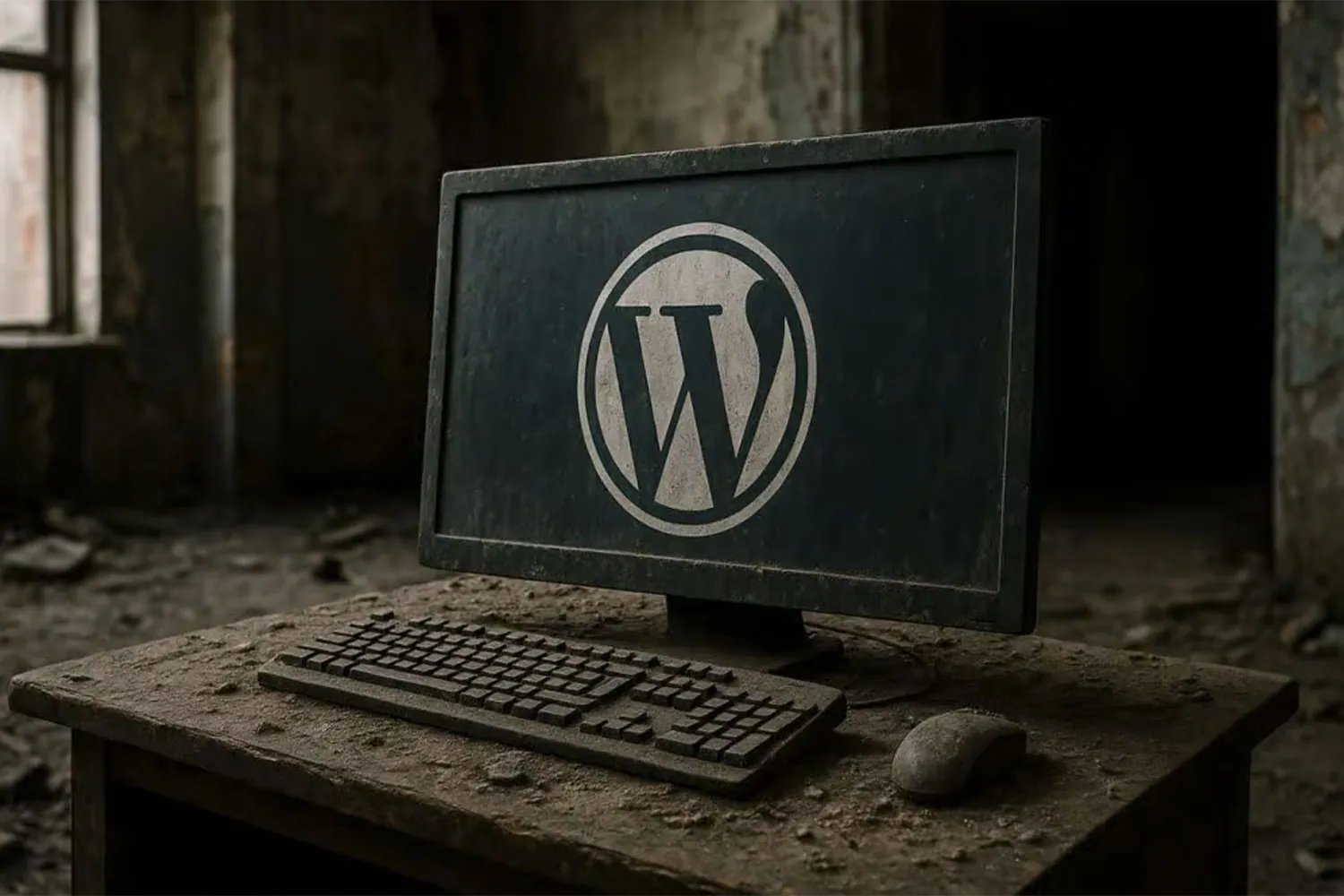
WordPress in 2025 isn't thriving; it is rotting. Bloated, outdated and hijacked by commercial greed, the world's most popular CMS has become a cautionary tale about stale innovation. If you are still building on WordPress, you may be stuck with something that no longer serves you.
WordPress, the giant that once powered a third of the internet, stands in 2025 as a paradox. On one hand it is still everywhere, powering blogs, newsrooms, e-commerce empires and SaaS landing pages.
On the other hand it is increasingly irrelevant to the progress of the modern web. It is bloated. Fragmented. Over-commercialised. And its once-vibrant open-source soul is slowly being strangled by a familiar antagonist: profit.
Let's talk, honestly, brutally and with a sense of grief, about what has happened to WordPress.
WordPress has always been a Frankenstein. PHP? Yes. MySQL? Of course. Thousands of plugins stitched together with mixed standards and varying support? Naturally. Yet for nearly two decades this messy architecture worked. It offered unprecedented freedom and customisation to developers and non-developers alike.
But here is the uncomfortable truth: in 2025 WordPress has become a victim of its own inclusivity. "Democratising publishing", its rallying cry, is now a marketing cliché splashed across investor decks and Automattic keynote slides, while the actual experience of building with WordPress is increasingly undemocratic, commercialised and convoluted.
Let's address the Gutenberg-shaped elephant in the room.
The block editor, launched in 2018, was supposed to modernise WordPress. Technically it did. In practice it created a rift. Gutenberg represents a single-page-app mentality bolted onto a legacy CMS.
It alienated experienced developers who had mastered the classic editor, and confused ordinary users who just wanted to "write a blog post" without dealing with columns, containers or reusable blocks that mysteriously break.
Fast-forward to 2025 and Gutenberg has metastasised into Full Site Editing (FSE), patterns, block themes and a jungle of UI metaphors that demand a mental model better suited to React developers than everyday bloggers.
WordPress now sits somewhere between Wix and React: too complicated for beginners, too primitive for modern developers.
In 2025 themes are paywalled at every turn. Plugins that once offered free functionality now limit their usefulness behind ever-higher payments. You no longer build with WordPress; you go shopping.
It isn't unusual to build a functional site and find yourself running six paid plugins, three freemium themes and a pile of bloated dependencies. Performance? Who cares, as long as it converts. The "it just works" ethos has been replaced by "it works... once you pay the $500/year subscription".
The freemium economy around WordPress isn't just booming; it is eating away at the platform's original value proposition.
Open-source ideals have been pushed to the margins by plugin developers and VC-backed theme shops that use WordPress as bait rather than as a foundation.
Let's be honest. WordPress in 2025 is a bad place for modern developers.
You want to write TypeScript? Good luck. You want to deploy with GitHub Actions and a CI/CD pipeline? Maybe, but it is overly complicated. You want composable architecture, headless CMS workflows, GraphQL APIs or serverless functions? Why not just use Sanity, Astro or Next.js?
The most damning indictment: WordPress no longer inspires developers. It drains them.
The REST API, once hailed as a revolution, is largely passed over in favour of GraphQL alternatives such as WPGraphQL (a third-party plugin, of course). Local development environments are still clunky. Security is a perennial migraine. The core creaks, the dashboard is ancient and relying on hooks and filters feels like coding in Morse code.
Speaking of modern architecture, WordPress has tried to go headless. But here is the problem: if you separate WordPress from its front end, what is left? A mediocre legacy CMS back end, outclassed by younger, leaner headless systems.
Sure, you can use WordPress as a headless back end. Many do. But why would you, when tools like Strapi, Payload and Contentful offer cleaner APIs, better developer ergonomics and less historical baggage?
That is WordPress's existential problem in 2025: it no longer knows who it is for.
It is time to talk about the empire behind the curtain. Automattic, the parent of WordPress.com, has grown more corporate, more opaque and less aligned with the open-source community that gave birth to it.
While WordPress core development stalls on consensus, Automattic delivers a polished premium experience on WordPress.com that outshines the .org version. There is now a two-tier system: WordPress for the masses, and WordPress for the monetised.
The community? Still passionate. Still building. But it now operates more like freelancers maintaining a legacy codebase for Automattic's benefit.
Some whisper about a fork. Others dream of a leaner WordPress 2.0, free of backward compatibility and rebuilt for the modern web. But let's be realistic: it won't happen. The inertia is too great and the ecosystem too tangled.
Instead, what we will see is fragmentation. Specialised WordPress distros. Even more headless hybrid stacks. A slow bleed of core contributors into competing ecosystems. And, for the first time in decades, serious competition from open-source rivals unafraid to kill their darlings.
Don't mistake this critique for a eulogy. WordPress will be here in 2030. And probably 2040. But its golden age is over.
What remains is a legacy platform trying hard to pretend it still leads, when in fact it is dragged forward by inertia and monetisation, not by vision or innovation.
Are you a content creator with no technical needs? WordPress still works. A company that needs cheap, fast content deployment? WordPress still ticks the boxes.
But if you are a modern developer building for the web in 2025? WordPress is behind the times, and you are already looking elsewhere.
Maybe that is fine.