

Platform Digital dan Perlindungan Anak: Implementasi Peraturan Menteri Komdigi No. 9 Tahun 2026
Perkembangan platform digital yang pesat membawa dampak besar bagi kehidupan anak-anak, baik dari si...
Blog
06 Mar, 2026
By
Yofie Setiawan
Becoming a web designer today is an exciting path that blends creativity, technology, and problem-solving. Even in the era of artificial intelligence, the role of a web designer remains important because businesses still need people who understand user behavior, brand identity, and digital experiences. The journey begins with understanding the fundamentals of the web and gradually developing both technical and creative skills.
The first step to becoming a web designer is learning how the web works. A strong foundation starts with basic web technologies such as HTML and CSS, which are used to structure and style web pages. JavaScript is also useful because it adds interactivity and dynamic behavior to websites. While modern tools and platforms can generate code automatically, understanding these fundamentals helps designers control layouts, fix problems, and collaborate effectively with developers.
Alongside technical knowledge, design principles play a crucial role. A good web designer understands visual hierarchy, typography, color theory, spacing, and layout composition. These principles guide how information is presented and how users navigate a website. Learning tools such as Figma, Adobe XD, or other interface design software helps designers prototype and visualize their ideas before they are built. Over time, designers develop a sense of balance between aesthetics and usability.
Practical experience is another essential part of the journey. Building real projects helps transform theoretical knowledge into practical skills. Many aspiring designers start by creating personal projects, redesigning existing websites, or helping small businesses and organizations. Each project builds a portfolio that demonstrates both creativity and problem-solving ability. A strong portfolio is often more valuable than formal credentials because it shows what a designer can actually produce.
Understanding user experience is also critical. Web design is not just about making something look good; it is about making websites easy to use and effective for their purpose. Designers must think about how users navigate pages, how quickly they find information, and how smoothly they can complete actions such as filling out forms or making purchases. Learning the basics of UX research, usability testing, and accessibility helps designers create websites that work well for a wide range of users.
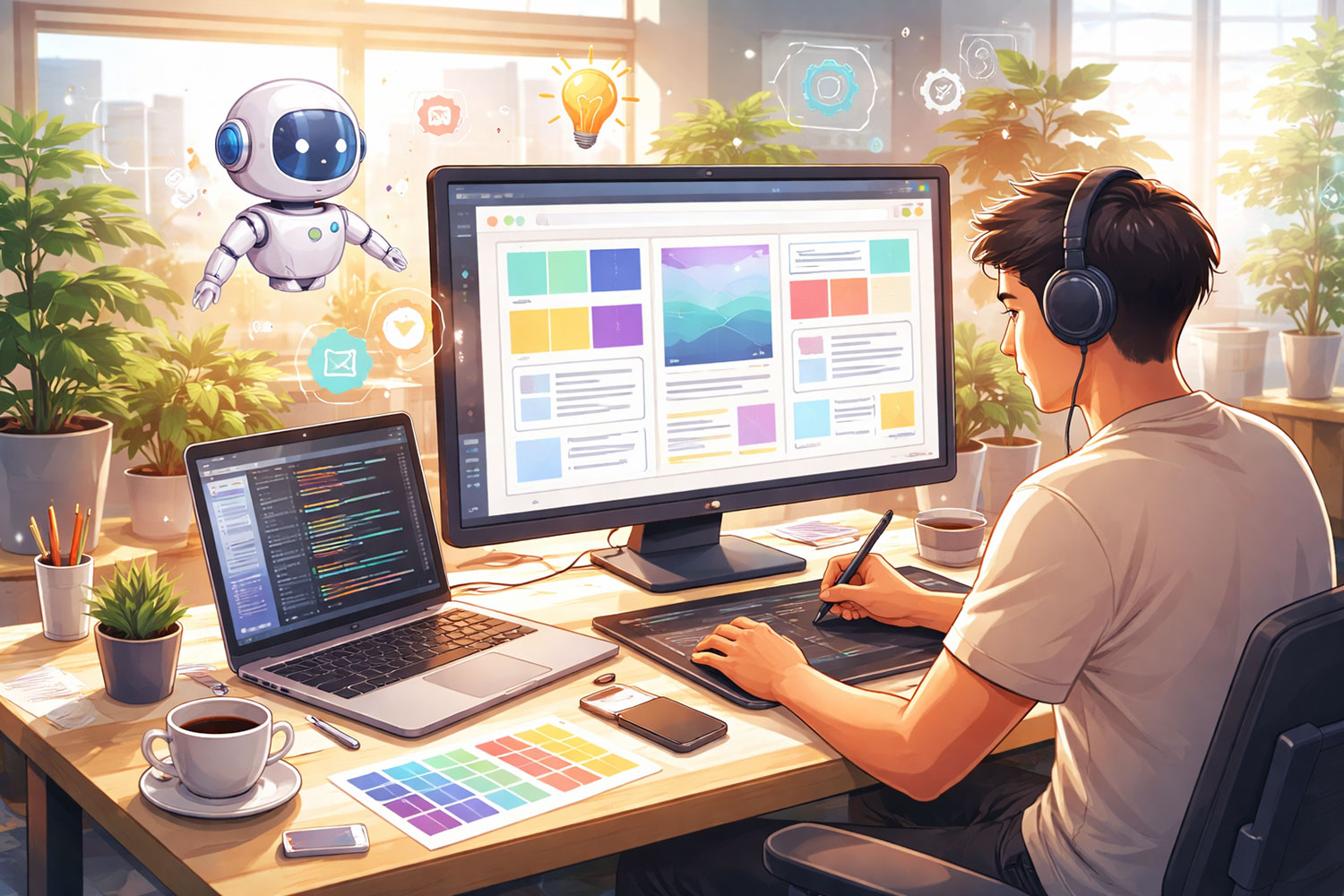
In the age of artificial intelligence, the role of web designers is evolving rather than disappearing. AI tools can generate layouts, write code, or suggest design ideas, but they still rely on human guidance and judgment. A skilled designer knows how to define a clear concept, evaluate whether a design truly serves a brand, and refine the details that make a digital experience feel natural and engaging. AI can speed up production, but it cannot fully replace human creativity, empathy, and strategic thinking.
To remain relevant in the AI era, web designers need to adapt their mindset. Instead of competing with AI, designers can treat it as a productivity tool. AI can help generate wireframes, suggest color palettes, produce placeholder content, or automate repetitive coding tasks. By using these tools wisely, designers can focus more on strategy, creativity, and user experience rather than spending time on repetitive work.
Another way to stay relevant is by expanding skills beyond visual design. Modern web designers often benefit from understanding search engine optimization, performance optimization, accessibility standards, and basic marketing principles. When designers understand how websites attract visitors and support business goals, they become more valuable to clients and organizations.
Continuous learning is also essential because web technologies change quickly. New frameworks, design trends, and tools appear regularly, and designers who stay curious and keep learning are more likely to succeed in the long term. Following industry blogs, participating in design communities, and experimenting with new tools help designers stay informed and inspired.
Ultimately, becoming a successful web designer is not just about mastering software or coding languages. It is about understanding people, solving problems creatively, and adapting to technological change. In an AI-driven world, the designers who thrive will be those who combine human creativity with technological tools to create meaningful digital experiences.
Share with your friends


Login Required
Loading login form...